His Glasses: A Designer’s Review for Small Business Merch
As an embroidery designer who has spent years digitizing patterns and consulting with small business owners, I approach every new machine embroidery design with a critical eye. It is not enough for a pattern to simply look cute on a screen; it must perform under the needle, hold up in the wash, and elevate the brand identity of the client using it. Recently, I reviewed His Glasses, a design marketed as a funny, high-quality addition to sewing projects. While the product description highlights its versatility across fabrics and clothes, my focus here is strictly on its viability for commercial use. Can this embroidery file serve as a cornerstone for branded merchandise, staff uniforms, or boutique accessories? Let us break down the practical application of this design for apparel decorators, Etsy sellers, and craft entrepreneurs.
First Impressions: Visual Personality and Brand Fit
The title His Glasses immediately suggests a playful, perhaps nostalgic or humorous tone. In the world of custom apparel, humor sells, but it must be executed with precision. Based on the description noting it is "funny" and "lovely," this design likely leans into a whimsical or character-driven aesthetic rather than a corporate, minimalist look. For small businesses like local cafés, quirky bookstores, pet brands, or creative studios, this visual personality is an asset. It feels approachable and handmade, which aligns perfectly with the current consumer demand for authentic, non-mass-produced goods.
However, "funny" can be subjective. When integrating His Glasses into a broader brand strategy, consistency is key. If your brand identity is sleek, ultra-modern, or luxury-focused, this design might clash. But for brands that value community, warmth, and a touch of eccentricity, this digital embroidery file offers a charming way to connect with customers. It transforms a standard item into a conversation starter, which is invaluable for customer engagement.
Real-World Applications for Small Business Merch
The true test of any design is its adaptability. Here is how His Glasses performs across various common merchandise categories for small business owners:
- Embroidered Patches: This is arguably the strongest use case. Creating an embroidered patch allows you to apply the design to multiple items without re-hooping each one. You can sell these as standalone collectibles or use them to upgrade plain inventory. The "funny" aspect makes them ideal for impulse buys at checkout counters.
- Staff Uniforms and Aprons: For bakeries, florists, or coffee shops, apron embroidery adds a layer of professionalism mixed with personality. Placing His Glasses on the chest pocket or lower corner of an apron humanizes the staff. It signals that the business is friendly and attentive to detail.
- Cap Embroidery: Hats are high-margin items for merch creators. However, curved surfaces are tricky. If the design is compact, it works well on the front panel of a dad hat or trucker cap. Ensure the design width fits within the standard cap hoop constraints to avoid distortion.
- Tote Bag Design: Canvas totes are staples for boutique merchandise. A central placement of His Glasses turns a utilitarian bag into a statement piece. The contrast of thread against natural canvas usually yields a rustic, premium look that appeals to eco-conscious shoppers.
- Product Packaging Accents: Consider stitching this design onto small fabric tags attached to your handmade products. It serves as a unique brand marker, distinguishing your handmade product from competitors who use printed labels.
Technical Considerations and Production Challenges
While the concept is strong, execution requires technical diligence. The product description states it is "high-quality" and ready for sewing, but as a designer, I advise verifying specific technical details before running a large batch. Since exact stitch counts and file formats are not explicitly detailed in the brief provided, you must check these specifications upon download.
Stitch Density and Fabric Texture: Funny or illustrative designs often rely on fine details. If His Glasses features thin lines or small text, high stitch density can cause puckering, especially on lightweight fabrics like t-shirts or linen. Always test on the actual fabric you intend to use. For textured fabrics like towels or heavy canvas, ensure the design has enough boldness to remain visible. Fine details may get lost in the pile of a towel or the weave of a rough tote.
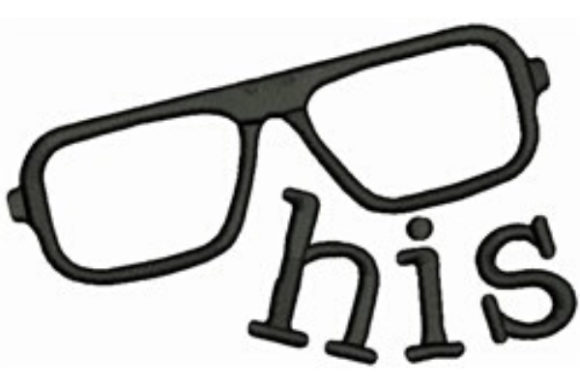
Thread Colors and Contrast: Humor relies on readability. If the design involves glasses, the distinction between the frames and the lenses is crucial. Test your thread colors against both light and dark garments. A design that pops on white may vanish on navy blue. Create a printable mockup or physical sample to verify contrast before offering it as a finished product.
Hoop Size and Stabilizer: Confirm the required hoop size. If the design is large, you may need a 5x7 or 6x10 hoop, which limits the types of machines your production team can use. Furthermore, proper stabilizer selection is non-negotiable. Use cut-away stabilizer for stretchy knits and tear-away for stable wovens to prevent the design from shifting or distorting during wear and washing.
Strategic Placement: Where to Use It Carefully
Not every location is suitable for every design. With His Glasses, avoid placing it in areas subject to extreme friction or stretching, such as the elbow of a fitted shirt or the seat of pants. Additionally, be cautious with very small patch sizes. If the design includes intricate elements, shrinking it down for a tiny label may result in thread breaks or a muddy appearance. Simplify or enlarge if necessary.
For dark uniforms, consider using a backing fabric or choosing thread colors with high luminance. If the design relies on subtle shading, it may not translate well to low-resolution embroidery on dark backgrounds. In such cases, adding a white underlay or choosing a lighter garment color can preserve the integrity of the design assets.
Enhancing Brand Identity and Customer Trust
Ultimately, the goal of using His Glasses is to strengthen your brand. Consistent use of unique embroidery builds recognition. When customers see this specific design on your tote bags, caps, and staff aprons, it creates a cohesive visual language. This consistency fosters trust and perceived value. A well-executed commercial embroidery project signals that you care about quality, which justifies higher price points for your small business merch.
Moreover, embroidered items have a tactile quality that printed goods lack. They feel premium and durable. By incorporating His Glasses into your product line, you are not just selling an accessory; you are selling a piece of your brand’s personality. This emotional connection drives buyer engagement and encourages social sharing, which is free marketing for your enterprise.
Final Designer Notes for Implementation
Before launching His Glasses into your product catalog, follow this checklist:
- Test in Black and White: Stitch out the design using only black and white thread first. This reveals structural issues without the distraction of color.
- Verify Commercial Licensing: Ensure the license terms allow for the number of physical items you plan to produce. Never assume; always read the fine print of the digital embroidery file provider.
- Create Client Mockups: If you are a decorator working for other businesses, present a realistic mockup showing the design on their specific garment type.
- Check Spacing: Ensure there is adequate spacing between elements to prevent thread bridging, which can look messy and unprofessional.
- Wash Test: Wash and dry your sample piece multiple times to ensure the design holds up and does not pucker or fade excessively.
In conclusion, His Glasses offers a delightful opportunity for small businesses to inject personality into their merchandise. Whether used for cap embroidery, tote bags, or branded patches, its success depends on thoughtful technical execution and strategic placement. By treating this design as a vital component of your brand identity rather than just a decoration, you can create memorable, high-value products that resonate with your audience.