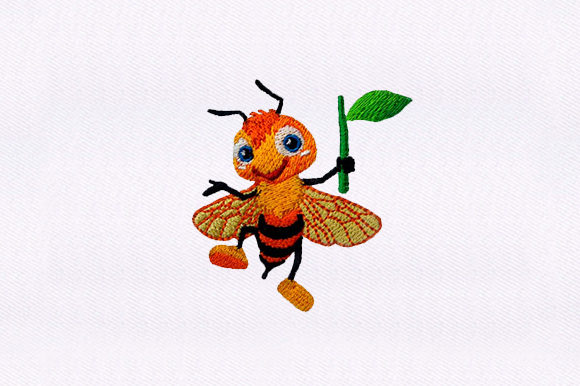
Happy Honey Bee: A Designer’s Review for Boutique Sweatshirts
As an embroidery designer who has spent years refining digitizing techniques and selecting the perfect motifs for small clothing brands, I approach every new machine embroidery design with a critical eye. It is not just about whether the image looks cute on a screen; it is about how that digital asset translates into thread on fabric. Recently, I had the opportunity to evaluate Happy Honey Bee for an upcoming limited drop of premium sweatshirts for a boutique client. This review breaks down why this specific piece from the Bugs category stands out as a versatile and commercially viable choice for modern apparel decorators.
First Impressions: Mood and Stitch Personality
The moment I loaded the digital embroidery file into my editing software, the charm of Happy Honey Bee was immediate. In a market saturated with overly complex or generic floral patterns, there is a refreshing appeal to well-executed insect-themed Embroidery. The design exudes a playful yet polished mood. It strikes a delicate balance between casual whimsy and professional finish, which is exactly what contemporary consumers are looking for in handmade products.
The layout appears thoughtful, with a clear focal point that draws the eye without overwhelming the surrounding negative space. For a designer, this is crucial. When we talk about stitch personality, we refer to how the threads lay down and interact. From the preview, Happy Honey Bee suggests a smooth satin stitch border with likely fill stitches for the body, creating a texture that feels substantial but not stiff. This "soft" look is essential for garments that promise comfort, such as cozy seasonal apparel.
Visualizing the Design on Premium Sweatshirts
The true test of any hoodie design is its versatility across different fabric colors and weights. For this project, we were working with a range of neutral and pastel sweatshirts. Here is how Happy Honey Bee performs in various scenarios:
- Neutral Tones: On oatmeal, heather grey, or sand-colored sweatshirts, the design pops beautifully. The contrast allows the thread colors to stand out, making the bee the star of the show. It feels rustic and organic, appealing to customers who love minimalist aesthetics.
- Dark Fabrics: Placing this design on navy or black requires careful selection of thread colors. However, the high-quality nature of the design ensures that it does not get lost. With bright yellows and crisp whites, it becomes a bold statement piece, perfect for streetwear-inspired boutique brands.
- Pastel Colors: For spring collections, pairing Happy Honey Bee with blush pink or mint green hoodies creates a feminine and soft visual. The cute aspect of the bug design complements the gentle hues, making it ideal for gift-oriented merchandise.
- Oversized Fits: On oversized hoodies, placement is key. This design works exceptionally well as a left-chest emblem, offering a subtle branding opportunity, or as a larger back print for a more decorative impact.
Technical Considerations for Commercial Embroidery
For Etsy sellers and small shop owners, the technical execution of a design can make or break a product launch. When preparing Happy Honey Bee for production, several practical concerns must be addressed to ensure a premium finished product.
Fabric Texture and Stabilizer Choice
Sweatshirts present a unique challenge due to their thickness and looped interior. The fabric texture of a heavy cotton blend can cause sinking if the stabilizer is not chosen correctly. For this design, I recommend using a cut-away stabilizer rather than tear-away. This ensures that the stitch density of the bee remains stable over time, preventing distortion after multiple washes. The design’s structure seems robust enough to handle the pile of fleece without losing definition, provided the hoop tension is adjusted correctly.
Thread Color Contrast and Readability
One of the strengths of Happy Honey Bee is its potential for high readability. Even at smaller sizes, the distinct separation between the wings, body, and facial features ensures the character remains recognizable. For commercial embroidery, this is vital. Customers need to identify the subject instantly. I suggest testing a few thread palettes. While traditional yellow and black are obvious choices, experimenting with monochromatic tones or unexpected color combos can elevate the design from standard to high-fashion.
Hoop Size and Placement
While the exact dimensions are not specified in the brief description, the proportional balance of Happy Honey Bee suggests it fits comfortably within standard hoop sizes used for chest logos. For a boutique brand, consistency in placement builds buyer trust. Whether you choose a 4x4 inch hoop for a subtle accent or a larger frame for a central graphic, ensure the design is centered and level. The compact nature of the bee makes it forgiving for slight variations in manual hooping, which is a benefit for small-batch production.
Enhancing Brand Identity and Product Value
In the world of online retail, particularly for handmade businesses, the perceived value of a product is heavily influenced by its presentation. Happy Honey Bee is not just a decoration; it is a branding tool. A well-embroidered bee on a high-quality sweatshirt signals attention to detail. It tells the customer that this is not a mass-produced item with a printed logo, but a crafted piece of art.
This distinction affects customer engagement. When shoppers see the texture of the threads in your printable mockup or lifestyle product photography, they connect with the tactile quality of the item. Using Happy Honey Bee as part of a cohesive collection—perhaps paired with other nature-inspired elements—can strengthen your brand identity. It positions your small shop as a curator of cute, high-quality, and thoughtful designs.
Marketing and Sales Strategy for Etsy Sellers
For those listing this item on platforms like Etsy, the versatility of Happy Honey Bee offers multiple marketing angles. You can position it as a unisex accessory, a cute gift for beekeepers, or a stylish addition to a capsule wardrobe. Highlighting the durability of the embroidery in your product descriptions can alleviate concerns about washing and wear.
Remember to showcase the design in context. Use mockups that display the sweatshirt being worn in cozy, everyday settings. Show close-ups of the stitching to emphasize the quality of the embroidery file. Mentioning that the design is suitable for various fabric types can broaden your appeal to custom apparel buyers who might want it on tote bags or hats instead of just sweatshirts.
Final Verdict: Is It Ready for Production?
After reviewing the visual appeal and considering the technical requirements, Happy Honey Bee proves to be a strong contender for any boutique brand’s lineup. It embodies the playful spirit of the Bugs category while maintaining the professionalism required for commercial use. The design feels premium, adaptable, and emotionally engaging.
Before running your full production batch, always verify the specific technical details such as the exact stitch count, supported file formats, and recommended hoop size, as these were not explicitly detailed in the initial product summary. Ensuring you have the correct digital assets will streamline your workflow. Ultimately, Happy Honey Bee offers a delightful blend of charm and quality that can significantly enhance the visual recognition and sales potential of your custom apparel line. It is a design that invites smiles, and in the retail world, that is a powerful asset.